 Shirakawa-go Village Tours
Home › Guides › What Is Gassho-Zukuri? The Thatched Houses of Shirakawa-go
What Is Gassho-Zukuri? The Thatched Houses of Shirakawa-go
Gassho zukuri is the farmhouse style of Shirakawa-go: steep thatched roofs angled at 60 to 70 degrees, named after hands pressed together in prayer and built to carry heavy snow. This guide explains the name, the roof, the attic floors once used for silkworms, the nail-free frame and the 20 to 30 year re-thatching, and how to see the houses from inside on a visit or an overnight stay.
Quick answer Gassho-zukuri in brief
Gassho-zukuri means constructed like hands in prayer, after steep thatched roofs angled between 60 and 70 degrees. The houses are farmhouses, not temples, and Shirakawa-go has over 100 of them, still lived in. The roofs are re-thatched every 20 to 30 years by the whole village working together.
Key takeaways
- Walk among the houses with a guide on a Shirakawa-go tour
- Step inside a thatched house on the Takayama and Shirakawa-go Small-Group Tour from Nagoya, which includes entry to one
- The JTB Shirakawa-go and Takayama Tour from Kanazawa also includes a visit to one thatch-roofed house
- Farmhouse rooms book online up to about 3 months ahead, see the overnight section
What is Gassho-Zukuri?
Gassho-zukuri is a style of farmhouse with a steep triangular thatched roof built like two hands pressed together in prayer.
The word gassho means praying hands, and the name describes the roof shape, not a religious building.
The Name Is About the Roof
The steep triangular gable was designed to carry heavy snow. Seen from the end, the two roof slopes meet like palms joined in prayer, which is where the name comes from.
The style is farmhouse architecture, not a temple or shrine style. Families lived and worked in these buildings for generations, and many still do.
The design emerged in the Edo period, between 1603 and 1868, in what are now Gifu and Toyama Prefectures. Most of the houses you see today were built in large numbers in the late 19th century, when their big roof spaces suited silkworm raising.
Source: Shirakawa-go Tourist Association.
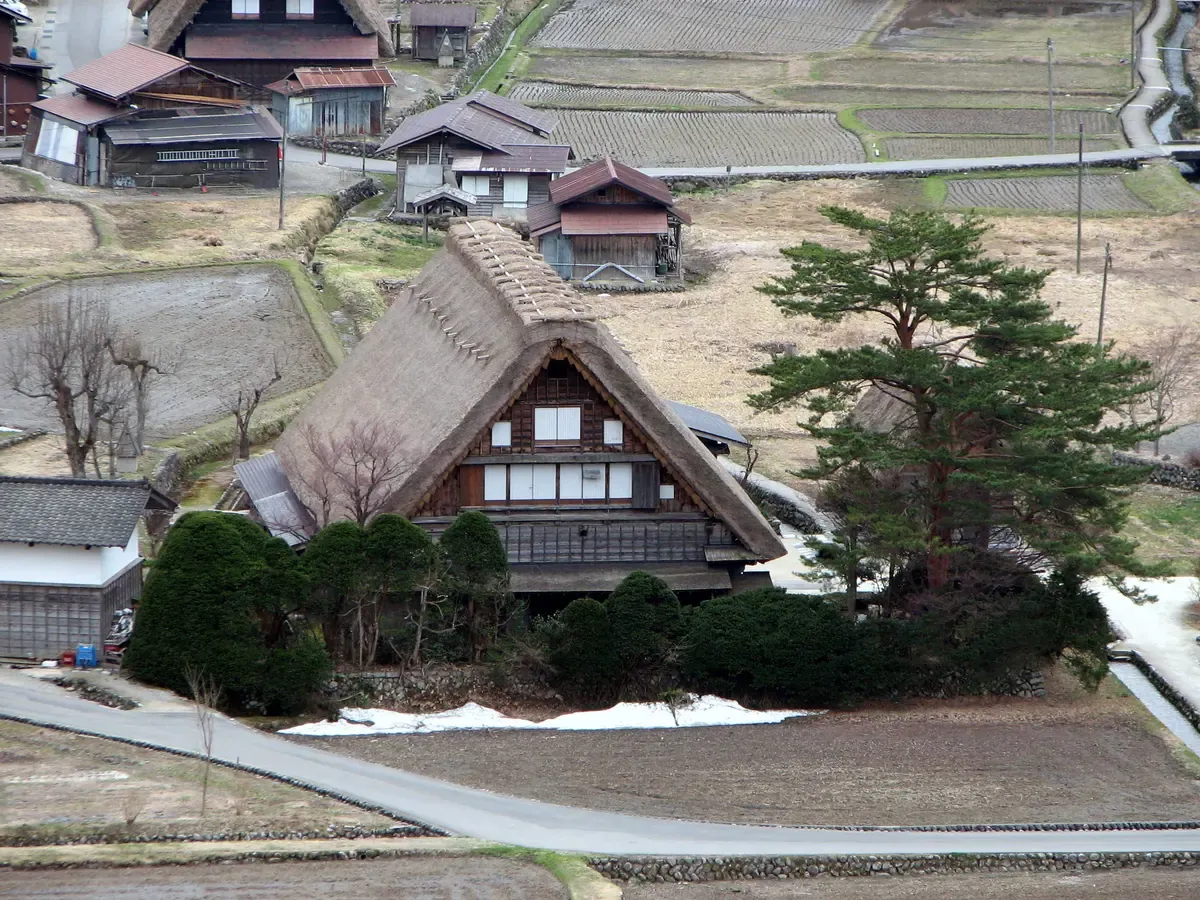
Wada House, a gassho-zukuri farmhouse in Ogimachi. Photo: Bernard Gagnon, CC BY-SA 3.0, via Wikimedia Commons
Why is Shirakawa famous?
Shirakawa is famous for its gassho-zukuri farmhouses, listed by UNESCO in 1995 as part of the Historic Villages of Shirakawa-go and Gokayama.
Ogimachi, the main village of Shirakawa-go, sits in the valley of the Sho River in Gifu Prefecture. Its thatched houses are the reason travellers come.
A World Heritage Village
Ogimachi was added to the UNESCO list in 1995 together with two other villages, Ainokura and Suganuma in Gokayama, across Gifu and Toyama Prefectures. The listed area covers 68 hectares.
The region was once called the last unexplored area of Japan, because heavy snow cut it off each winter. The houses are built to survive that.
The village has over 100 large and small gassho-zukuri buildings, and people still live in them. The village office calls Shirakawa-go a living village and not a reenactment, so keep off private land and give residents their privacy as you walk around.
Sources: Shirakawa Village, Shirakawa-go Tourist Association, Shirakawa Village.
What does gassho-zukuri mean and how is it pronounced?
It means constructed like hands in prayer and is said gah-sho zoo-koo-ree.
Breaking the word apart makes both the meaning and the pronunciation simple.
Say It in Two Parts
Gassho is two syllables, gah-sho. Zukuri is three, zoo-koo-ree. Say it as gah-sho zoo-koo-ree and you will be understood at the bus terminal and in the village shops.
The image behind the name is a person pressing the palms together. The two roof slopes rising to a ridge look like that from the gable end, and the full phrase translates to constructed like hands in prayer.
Source: Shirakawa-go Tourist Association.
Why are the roofs that steep?
The roofs are angled between 60 and 70 degrees so heavy snow slides off instead of crushing the house.
Snow is the whole reason for the shape. The tourist association records February snow of 170 cm or more, with a maximum of 4.5 m.
Angle, Snow and Sun
Annual snowfall in the region can reach 11 meters. A roof angled at 60 to 70 degrees, close to an equilateral triangle, sheds much of that load before it piles up.
The houses are also oriented north-south. This keeps wind resistance low and lets the sun reach both roof slopes, so the thatch dries and the rooms catch more light.
The steep shape has a second payoff. It creates several floors of usable space under the roof, which is where silkworms were raised.
Source: Shirakawa-go Tourist Association.
What does a gassho-zukuri floor plan look like?
A gassho-zukuri house has family rooms around a sunken hearth on the ground floor and several open levels in the attic once used for silkworm raising.
Think of the house as two zones: the warm living floor below and the tall work space under the roof.
From the Irori to the Attic
The centre of the ground floor is the irori, a square sunken hearth. Its smoke rises through the house and helps preserve the thatch and the binding ropes, so the hearth was never only for cooking.
Above the living floor run two or three levels of open attic. Sericulture in the valley traces back to the 16th century and thrived until the 1970s, and silkworm trays filled these floors. Warm air from the irori rose and kept them usable.
Several houses in Ogimachi are open to visitors, such as Wada House and Kanda House, so you can climb into the attic levels and see the roof frame from inside.
How are the houses built without nails?
The roof frame is tied together with straw ropes and neso bindings of witch hazel saplings, with no nails at all.
Joinery and rope bindings hold the frame, and the knots tighten as the material dries.
Ropes, Joinery and the Sasu System
The frame uses wooden joinery and hemp ropes. The sasu structural system removes the need for vertical roof supports, which keeps the attic floors open for silkworm trays.
The neso bindings are made of witch hazel saplings. Their knots tighten as the wood dries, so the roof grows tighter over time rather than looser.
Even the foundations were shared work. Large stones were driven with a human-powered pile driver worked by dozens of villagers, who sang to stay in time. This cooperation, called yui, was practiced this way until the early 1960s.
How often are the roofs replaced?
Roofs are re-thatched once every 20 to 30 years, with the whole village working together in a shared labour called yui.
A thatch roof does not last forever, and replacing one is far too big a job for one family.
A Roof Job for the Whole Village
Every 20 to 30 years a house gets new thatch, and the straw ropes and neso bindings are replaced at the same time.
The work is done by the whole village together. This shared labour is called yui, and it is one reason the architecture survived. No single family could re-thatch a house alone.
Protection goes further than labour. The Ogimachi Natural Environment Preservation Society, founded in 1971, bans the sale, renting and demolition of gassho-style houses. Residents sum it up in three rules: do not sell, do not rent, do not destroy.
Sources: Shirakawa Village, Shirakawa-go Tourist Association.
What is the oldest village in Japan?
Shirakawa-go does not hold that title, but its gassho houses date from the Edo period and the late 19th century, and the valley's history runs back centuries further.
Travellers often ask this because Ogimachi looks timeless. Its value lies elsewhere.
Old, but Not the Oldest
The gassho design emerged in the Edo period, between 1603 and 1868, and most surviving houses were built in the late 19th century. Settlement in the valley is older: the Tendai sect long controlled the region before the Jodo Shin sect replaced it in the 13th century.
What makes Ogimachi special is not age alone. It is the survival of a complete farmhouse landscape, protected by its residents since 1971, made a preservation district in 1976 and listed by UNESCO in 1995.
Source: Shirakawa Village.
Tours That Fit
Both day tours include a visit inside one thatched house.
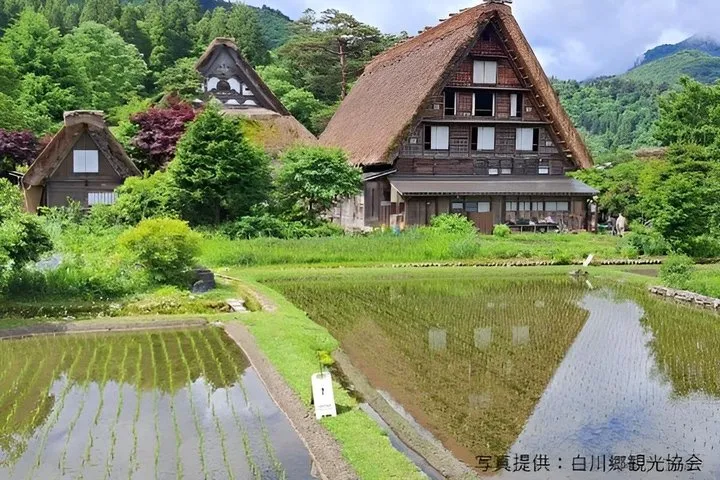 from $166.72
JTB Shirakawa-go and Takayama Tour from Kanazawa
JTB coach day from Kanazawa with a thatched house visit and Takayama, and an optional drop-off at Takayama Station.
Check Availability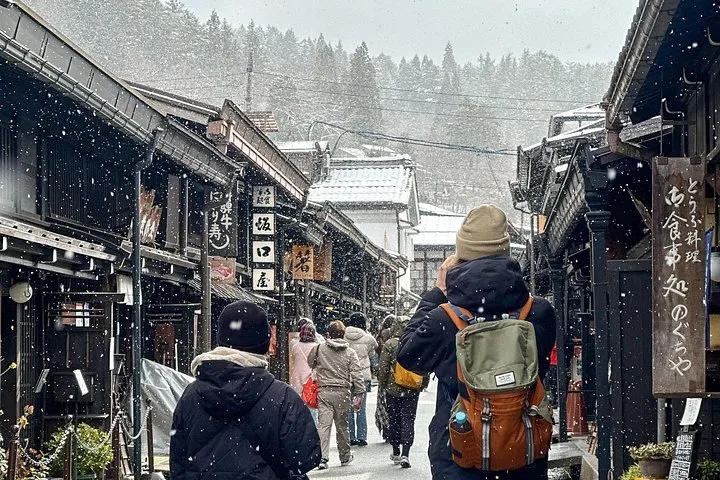 from $189.33
Small group
Takayama and Shirakawa-go Small-Group Tour from Nagoya
A small-group day from Nagoya with a choice of four guide languages, a thatched house entry and an optional drop-off in Takayama or Kanazawa.
Check AvailabilityCan you stay overnight in a gassho-zukuri farmhouse?
Yes, more than a dozen farmhouses in and around Ogimachi take overnight guests, with dinner and breakfast included, and rooms book out early.
Sleeping under the thatch is the closest look at how the houses work. The farmhouse inns are called minshuku.
What You Get and How to Book
Guest rooms have tatami floors and futon at night, and baths and toilets are typically shared. The rate is per person and includes dinner and breakfast, and each house sets its own price.
Rooms at gassho houses, ryokan and guest houses can be booked online on the tourist association's Stay page up to about 3 months ahead. Farmhouse stays sell out, so book on the day the window opens.
If a night is not possible, a day trip still lets you walk the village and enter a house. The JTB Shirakawa-go and Takayama Tour from Kanazawa costs $166.72 per person over 8-10 hours, includes one thatch-roofed house and has free cancellation up to 24 hours ahead, rated 4.7 from 45 reviews.
What is Japan's most beautiful village?
Japan has no official ranking, but Ogimachi is the largest of the three World Heritage gassho villages and the one most travellers come to see.
The question points at Shirakawa-go for many travellers, so here is how it compares with its two sister villages.
Three Villages, One Listing
The UNESCO listing covers three villages across Gifu and Toyama Prefectures, 68 hectares in all. Ogimachi is the largest and the easiest to reach, with over 100 gassho buildings. Ainokura and Suganuma in Gokayama are smaller and quieter.
If one day is all you have, the Takayama and Shirakawa-go Small-Group Tour from Nagoya costs $189.33 per person over 9 hours 30 minutes, includes entry to one thatched house and has free cancellation up to 24 hours ahead, rated 5 from 26 reviews. Compare it with every other Shirakawa-go tour before you book.
Source: Shirakawa-go Tourist Association.
Gassho-Zukuri FAQ
What is Gassho-Zukuri?
It is a farmhouse style with a steep thatched roof shaped like hands pressed in prayer, built to carry heavy snow. See the houses with a guide on a Shirakawa-go tour.
Why is Shirakawa famous?
For its gassho-zukuri farmhouses. Ogimachi was added to the UNESCO list in 1995, and the village has over 100 such buildings, still lived in. Read why the village is listed.
Are the houses built without nails?
Yes. The roof frame uses wooden joinery, straw ropes and neso bindings of witch hazel saplings, and the knots tighten as the material dries. More in how the houses are built.
What were the attics used for?
Silkworm raising. The big roof spaces suited sericulture, which is why the houses were built in large numbers in the late 19th century. See the floor plan.
Can I go inside a gassho house on a day tour?
Yes. The JTB Shirakawa-go and Takayama Tour from Kanazawa includes a visit to one thatch-roofed house, and so does the small-group tour from Nagoya.
Can you stay overnight in a gassho-zukuri house?
Yes. More than a dozen farmhouses in and around Ogimachi take guests, and rooms book online up to about 3 months ahead. See farmhouse stays.
How often is a thatched roof replaced?
Every 20 to 30 years, by the whole village working together in a shared labour called yui. More in re-thatching.
Is Shirakawa-go a museum?
No. The village office calls it a living village and not a reenactment, so respect residents' privacy as you walk the lanes. Plan the visit with a Shirakawa-go tour.
More Guides
- Gokayama vs Shirakawa-go: Ainokura, Suganuma and Which to Visit
Compare Ainokura and Suganuma with Shirakawa-go in 2027: village sizes, bus times from Kanazawa, where to eat and tour options. Plan your visit now.
- Where to Stay: A Hotel in Shirakawa-go or a Gassho House?
A hotel in Shirakawa-go or a gassho farmhouse in 2027? Compare 3 stay types, the 3-month booking window and winter tips. Plan your night.
- Kanazawa to Shirakawa-go: Bus or Day Tour
Kanazawa to Shirakawa-go in about 80 minutes by bus. Compare fares, morning departures and day tours for 2027, then pick the right option.