 Shirakawa-go Village Tours
Home › Guides › Gokayama vs Shirakawa-go: Ainokura, Suganuma and Which to Visit
Gokayama vs Shirakawa-go: Ainokura, Suganuma and Which to Visit
Gokayama suits travellers who want quieter World Heritage villages with fewer people, while Shirakawa-go suits first-time visitors who want the classic view and easy access. Both share one UNESCO listing from 1995. This guide compares Ainokura and Suganuma with Shirakawa-go, then covers buses, driving, food, winter hours and the day tours that combine them from Kanazawa or Takayama.
Quick answer Quick answer: Gokayama vs Shirakawa-go
Gokayama is smaller and quieter than Shirakawa-go, with two World Heritage villages, Ainokura and Suganuma. Shirakawa-go is the largest village, with over 100 gassho buildings and the most facilities, so it suits a first visit, while Gokayama suits travellers who want calm. You can see both in one day, such as on the 7 hour 45 minute bus tour from Kanazawa.
Key takeaways
- Book a Shirakawa-go tour that covers both villages in one day
- The Shirakawa-go and Gokayama Bus Tour from Kanazawa takes 7 hours 45 minutes, costs $94.78 per person and includes lunch
- From Takayama, the Shirakawa-go and Gokayama Nohi Bus Tour from Takayama covers both areas in 7 hours for $84 per person
- Going alone? Check how to get to Gokayama: some Kanazawa buses to Suganuma run April to November only
Which is better, Shirakawa-go or Gokayama?
Shirakawa-go is better for a first visit and Gokayama is better for quiet, so the right choice depends on what you want from the day.
Both areas sit on the same UNESCO World Heritage listing from 1995. They share the same steep thatched roofs but feel very different on the ground.
Head to head
The World Heritage property has three villages: Ogimachi in Shirakawa-go, and Ainokura and Suganuma in Gokayama. Ogimachi is the largest and busiest. Gokayama is smaller, with gassho houses, souvenir shops and cafes.
Gokayama is a collective name for about 70 settlements, and only Ainokura and Suganuma are on the World Heritage list. The table compares the two areas on access, cost, time, sights and crowds, from the village offices, Hokutetsu and the Toyama tourism board.
| Feature | Shirakawa-go (Ogimachi) | Gokayama (Ainokura and Suganuma) |
|---|---|---|
| Getting there | Served by the World Heritage Bus and highway buses, and reached by car via the highway | World Heritage Bus from JR Johana Station takes about 40 minutes to Suganuma, or about 1 hour 35 minutes from JR Takaoka Station, or drive via Gokayama IC on the Tokai-Hokuriku Highway |
| Cost | Walking the village is free, most houses charge $1.90 (¥300) to $2.53 (¥400) and the open-air museum $5.06 (¥800) | Walking the villages is free, museums charge at the door, Kanazawa to Suganuma bus $13.90 (¥2,200) on Hokutetsu |
| Time needed | About 2 to 3 hours to walk the village, per the tourist association | About 1 hour in Ainokura on the bus tours from Kanazawa and Takayama |
| What you see or do | The largest gassho village, with over 100 gassho buildings, the viewpoint and the most shops | Ainokura has 20 gassho houses, the oldest said to be some 400 years old, Suganuma has nine gassho houses, two museums and a river setting |
| Crowds | The busiest of the three villages | Quieter and smaller than Shirakawa-go |
| Who it suits | First-time visitors and anyone who wants the classic view | Travellers with more time who want calm and a slower pace |
One listing, three villages
The villages lie in a river valley surrounded by the rugged high mountains of the Chubu region of central Japan, and they were remote and isolated for centuries. Ainokura was inscribed on the World Heritage List in December 1995, alongside the other two villages. The steep gassho roof has a slope of about 60 degrees, and re-roofing is done by the community working together, a shared labour called yui.
Source: Shirakawa-go Tourist Association.
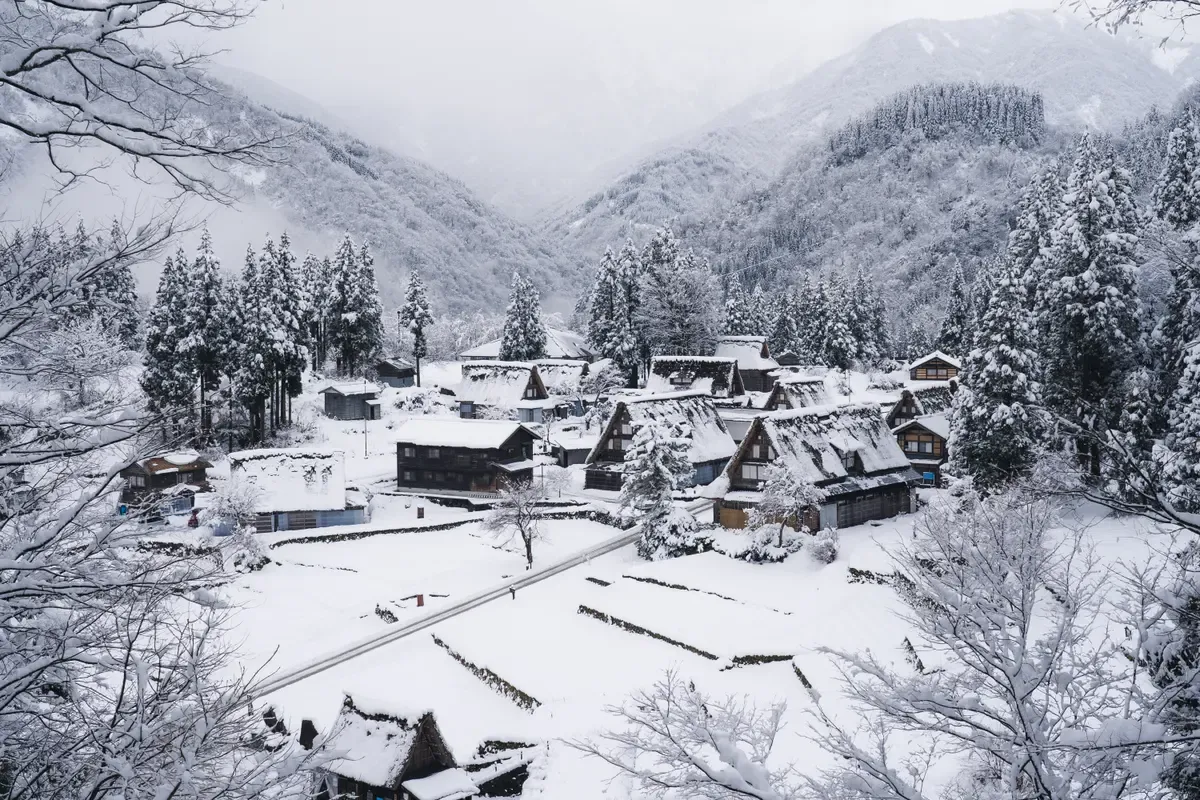
Ainokura village in Gokayama under winter snow. Photo: SHori, CC BY 4.0, via Wikimedia Commons
Tours That Fit
These tours cover both areas in one day, so you do not have to choose.
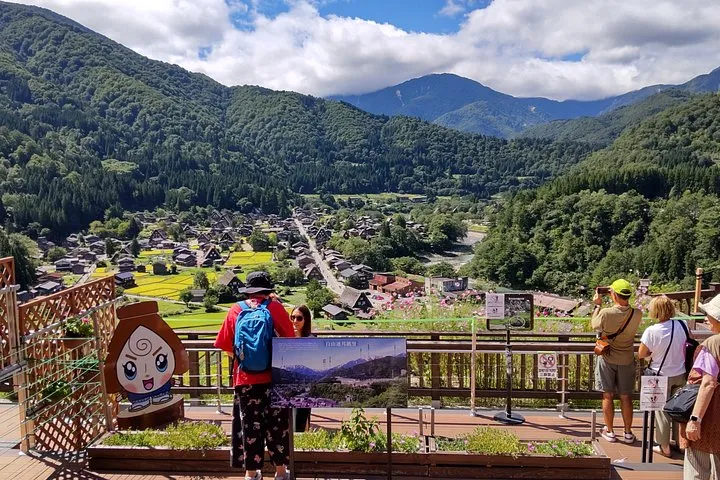 from $94.78
Shirakawa-go and Gokayama Bus Tour from Kanazawa
Both UNESCO areas in one coach day from Kanazawa Station: about 2 hours in Ogimachi, a Hida set lunch, then Ainokura in Gokayama.
Check Availability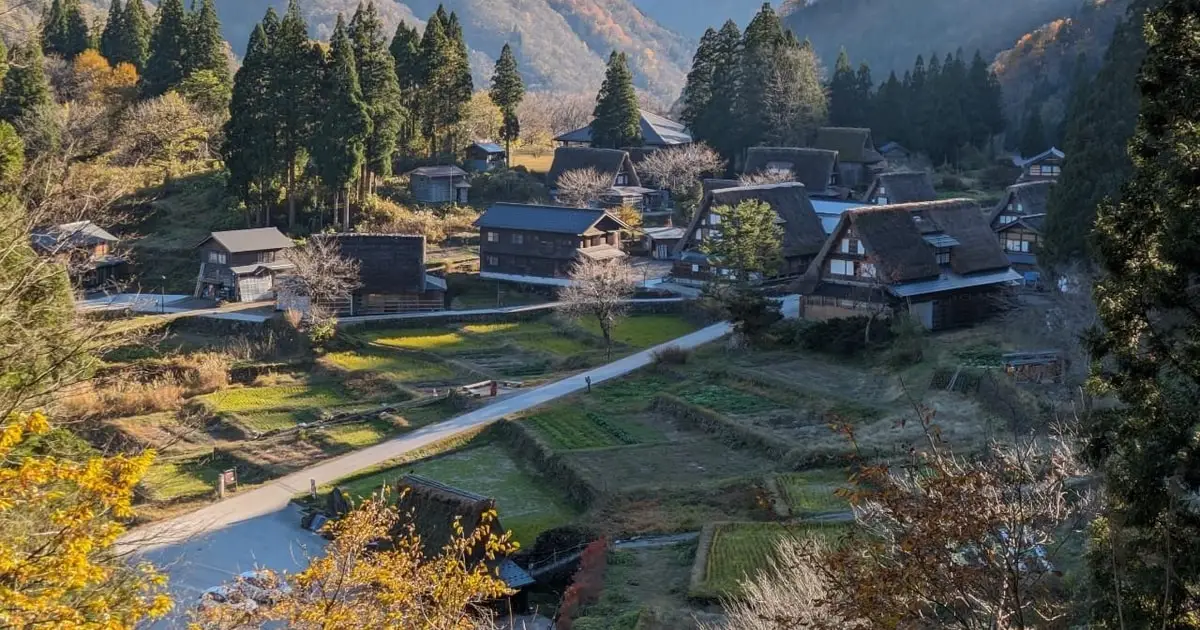 from $177
Shirakawa-go, Gokayama and Wood Carving Tour from Kanazawa
Inami wood carving town, paper-making in Gokayama and 2 hours guided in Shirakawa-go, from Kanazawa Station.
Check Availability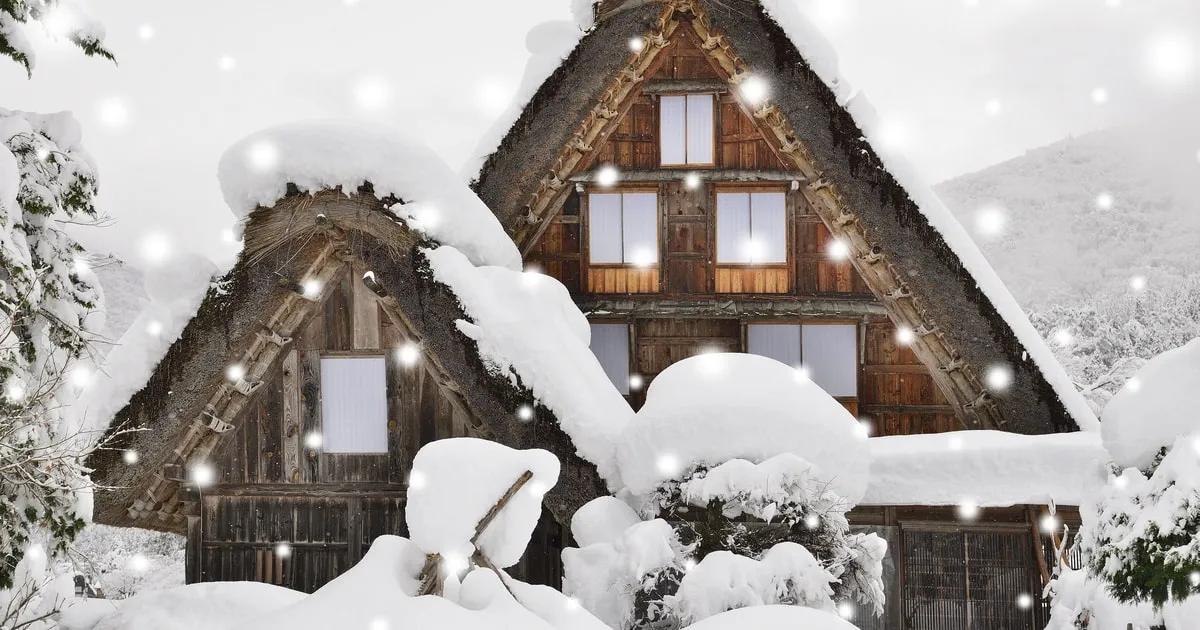 from $84
Lowest price with Gokayama
Shirakawa-go and Gokayama Nohi Bus Tour from Takayama
A Nohi Bus tour from Takayama with the Minkaen entry, the observatory shuttle and Ainokura in Gokayama in the price.
Check Availability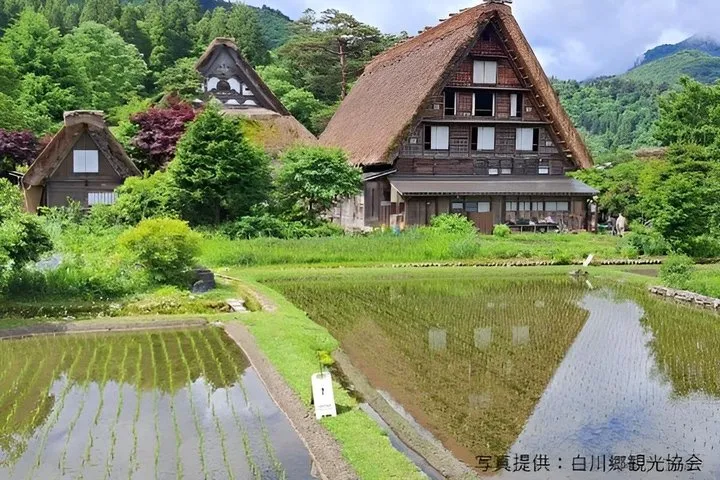 from $166.72
JTB Shirakawa-go and Takayama Tour from Kanazawa
JTB coach day from Kanazawa with a thatched house visit and Takayama, and an optional drop-off at Takayama Station.
Check AvailabilityIs Gokayama worth it?
Yes, Gokayama is worth it if you want World Heritage gassho villages without the crowds of Shirakawa-go.
Gokayama rewards travellers who enjoy walking through small hamlets rather than ticking off a single famous viewpoint.
Why it works
Ainokura has 20 gassho-style houses known as minka, most 100 to 200 years old. Suganuma sits beside the Sho River and has nine gassho-style houses plus the Gokayama Folklore Museum and the Niter Museum. During the Edo period the local economy was based on Japanese paper, sericulture and saltpeter production for gunpowder, and that working history is still visible in the museums.
If your time is short, Shirakawa-go gives more per hour. If you have a full day, do both on a bus tour from Kanazawa or Takayama, such as the Shirakawa-go and Gokayama Bus Tour from Kanazawa at $94.78 per person.
What is the most remote village in Japan?
The World Heritage gassho villages of Ainokura and Suganuma in Gokayama are among the most remote, sitting in an isolated mountain river valley.
UNESCO notes that the three villages of Shirakawa-go and Gokayama were remote and isolated in the rugged Chubu mountains.
What remoteness means for your trip
The isolation protected the villages, and it still shapes travel today. Hokutetsu runs some departures from Kanazawa to Suganuma from April through November only, at $13.90 (¥2,200) one way, with a seat reservation required on every highway bus. Driving via Gokayama IC on the Tokai-Hokuriku Highway is the flexible option.
Gokayama Taxi is the only taxi company in Gokayama and takes bookings by phone in Japanese only. A guided tour removes the guesswork, since transport between the villages is included.
How do I get to Gokayama?
Most visitors reach Gokayama by the World Heritage Bus from JR Johana or Takaoka Station, by Hokutetsu bus from Kanazawa, by car via Gokayama IC, or on a guided day tour from Kanazawa or Takayama.
There is no train to the villages, so the choice is bus, car or tour.
Bus, car or tour
The table compares the ways into Gokayama by route and journey time, from the Toyama tourism board, Hokutetsu and the Gokayama tourist office. The World Heritage Bus also links Gokayama with Shirakawa-go, so check its timetable for the hop between Suganuma and Ainokura.
| Option | Route | Time |
|---|---|---|
| World Heritage Bus | JR Johana Station to Suganuma | About 40 minutes |
| World Heritage Bus | JR Takaoka Station to Suganuma | About 1 hour 35 minutes |
| Hokutetsu highway bus | Kanazawa to Suganuma | Some departures April to November only, $13.90 (¥2,200) one way, seat reservation required |
| Car | Gokayama IC on the Tokai-Hokuriku Highway | Depends on your start point |
| Day tour | Kanazawa or Takayama, covering both areas | 7 hours 45 minutes from Kanazawa, 7 hours from Takayama |
Why visit Ainokura, the quietest of the three villages?
Ainokura is worth visiting for its 20 gassho houses on a quiet hillside, with only a small cafe and a few souvenir shops.
Ainokura is the largest village in Gokayama but feels the least developed.
What to see
Ainokura has 20 gassho-style houses known as minka, most of them 100 to 200 years old, and the oldest is said to be some 400 years old. It was inscribed on the World Heritage List in December 1995. Walk the lanes between the houses, photograph the roofs from the edge of the village and stop at the small cafe and souvenir shops.
The Shirakawa-go and Gokayama Bus Tour from Kanazawa gives you 13:15-14:15 here, and the wood carving tour adds a paper-making workshop in the village.
What is there to see in Suganuma?
Suganuma offers nine gassho houses by the Sho River, two museums and easy walking in a compact hamlet.
Suganuma is the easiest of the Gokayama villages to visit, with a bus stop, museums and food within a few minutes walk.
Museums and river views
The hamlet is surrounded on three sides by the Sho River and has 12 houses, nine of them gassho-zukuri. It is home to the Gokayama Folklore Museum and the Niter Museum. Suganuma Gassho-Zukuri Village is open from April to November between 8:00 and 17:00, and from December to March between 9:00 and 17:00.
Where to eat in Suganuma
Gorobei is a family-run restaurant in a 170-year-old gassho home serving a Gokayama Tofu Set and the Gorobei Gozen with salt-grilled iwana char. It opens 10:00-17:00 and closes irregularly. Sabo Tenohira is a father-daughter cafe open 10:00-17:00, until 16:00 in winter, and closed on Mondays, Tuesdays and some Thursdays, so plan your food stop around those hours.
What are the best things to do in Gokayama?
The best things to do are walking Ainokura and Suganuma, visiting the two Suganuma museums, joining a sasara workshop and hearing the Kokiriko folk songs.
Gokayama packs craft, music and food into a small area.
Culture, craft and food
A sasara-making workshop for the Kokiriko folk dance is held in Kaminashi village. The Gokayama tourist office promotes regular performances of Kokiriko, described as one of the oldest Japanese folk songs, so time your visit if a performance is on. Add a meal at Gorobei and coffee at Sabo Tenohira in Suganuma.
Combine it with Shirakawa-go on a guided day, such as the Shirakawa-go, Gokayama and Wood Carving Tour from Kanazawa at $177 per person, which includes a paper-making workshop in Gokayama and is rated 4.9 from 243 reviews. There is no paper-making on that tour from 27 December to 3 January.
What is Gokayama like in winter?
Gokayama in winter means deep snow and shorter opening hours, with Suganuma Gassho-Zukuri Village open from 9:00 to 17:00 from December to March.
Winter transforms the villages but also narrows your transport options.
Snow, hours and access
Suganuma Gassho-Zukuri Village opens at 9:00 from December to March, one hour later than the rest of the year, and closes at 17:00. Sabo Tenohira cafe closes at 16:00 in winter. Some Hokutetsu departures from Kanazawa to Suganuma run only from April through November, so in winter check the timetable before you travel, or drive via Gokayama IC with studless tyres or chains, since snow falls from late December to early March.
A guided tour is the simplest winter option because transport is arranged. On the Shirakawa-go and Gokayama Bus Tour from Kanazawa, the roadside stop Michi no Eki Shirakawa-go closes from 29 December to 1 January and the tour stops at Jottekale Castleside in Toyama instead.
Can you stay overnight in Gokayama or visit an onsen there?
Yes, you can sleep in a gassho inn such as Gassho Nakaya Inn, but none of the Gokayama day tours stops at an onsen, so ask your inn about bathing when you book.
Staying overnight lets you walk the villages after the day crowds leave.
Sleeping in a gassho house
Visit Toyama highlights Gassho Nakaya Inn, a gassho-style stay in the area, for a night in a historic house. Contact the inn directly for rates and bathing. An overnight stay pairs well with a morning in Ainokura before the tour buses arrive.
If you prefer a single day, the JTB Shirakawa-go and Takayama Tour from Kanazawa runs 8-10 hours and covers Shirakawa-go and Takayama, not Gokayama, so pick a Gokayama tour if Ainokura matters to you.
Which village should you choose for your trip?
Choose Shirakawa-go for a first short visit, Suganuma for an easy half day with museums and food, and Ainokura for the quietest walk.
Match the village to your time, transport and crowd tolerance.
Pick by traveller type
The table matches each kind of traveller to the village or tour that fits, from the village descriptions above and the tour listings on this site.
| Traveller type | Best pick | Why |
|---|---|---|
| First-time visitor | Shirakawa-go | Largest village and the classic view |
| Food lover | Suganuma | Gorobei restaurant and Sabo Tenohira cafe in one hamlet |
| Quiet seeker | Ainokura | 20 gassho houses and few crowds |
| Museum fan | Suganuma | Folklore Museum and Niter Museum |
| Driver | Gokayama | Direct access via Gokayama IC |
| One-day visitor | Combined tour | Both areas covered with transport included |
Gokayama FAQ
Is Gokayama worth it?
Yes. You get two World Heritage villages with the same steep gassho roofs as Shirakawa-go, plus museums and folk music, with fewer people. A combined Shirakawa-go tour from Kanazawa covers both areas in one day.
Which is better, Shirakawa-go or Gokayama?
Shirakawa-go is better for a first visit because it is the largest village with the most facilities. Gokayama is better if you want quiet villages. See the comparison table.
How do I get to Gokayama?
Take the World Heritage Bus, about 40 minutes from JR Johana Station or 1 hour 35 minutes from JR Takaoka Station, drive via Gokayama IC, or take the Hokutetsu bus from Kanazawa to Suganuma at $13.90 (¥2,200), some departures April to November only. Details in getting there.
What is the most remote village in Japan?
The World Heritage villages of Shirakawa-go and Gokayama were long among the most isolated, in a river valley surrounded by the rugged Chubu mountains. Read what remoteness means for your trip.
Can you visit Gokayama and Shirakawa-go in one day?
Yes. The Shirakawa-go and Gokayama Bus Tour from Kanazawa takes 7 hours 45 minutes at $94.78 per person, and the Shirakawa-go and Gokayama Nohi Bus Tour from Takayama takes 7 hours at $84 per person.
What is Gokayama famous for?
Gokayama is famous for its gassho-zukuri houses with roofs sloped at about 60 degrees, its UNESCO listing alongside Shirakawa-go since 1995, and the Kokiriko folk song, described as one of the oldest in Japan. See things to do.
Is there an onsen in Gokayama?
None of the Gokayama day tours stops at an onsen. If bathing matters, ask a gassho inn such as Gassho Nakaya Inn when you book. See staying overnight.
When is Suganuma village open?
Suganuma Gassho-Zukuri Village is open from 8:00 to 17:00 from April to November and from 9:00 to 17:00 from December to March. More in Suganuma.
More Guides
- Kanazawa to Shirakawa-go: Bus or Day Tour
Kanazawa to Shirakawa-go in about 80 minutes by bus. Compare fares, morning departures and day tours for 2027, then pick the right option.
- What Is Gassho-Zukuri? The Thatched Houses of Shirakawa-go
Gassho-zukuri means hands in prayer: roofs at 60 to 70 degrees, re-thatched every 20 to 30 years. See how they work and plan your 2027 visit.
- Where to Stay: A Hotel in Shirakawa-go or a Gassho House?
A hotel in Shirakawa-go or a gassho farmhouse in 2027? Compare 3 stay types, the 3-month booking window and winter tips. Plan your night.